



As temps increase, so do health risks
Extreme heat is on the rise, but some people are at higher risk of heat illness. Know how to protect yourself and your loved ones.
This summer’s temperatures are on track to be hotter than average in Nebraska. That’s important because extreme heat creates dangerous conditions for everyone. Yet some people are at increased risk due to health factors, housing, jobs or even location within the city.
Fortunately, there are ways to reduce the risk of heat illness. You can take actions to protect yourself and others, and you can know the symptoms of heat illness to watch for.
Understanding heat illness
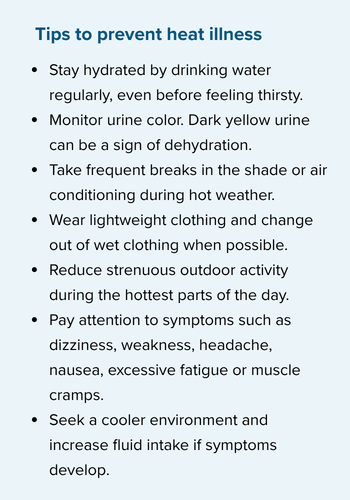
Heat illness happens when heat and humidity outpace the body’s ability to cool itself. Heat cramps, heat exhaustion and heat stroke are all forms of heat illness. Symptoms can include excessive sweating; feeling very tired and weak; or feeling dizzy, lightheaded or nauseated. Chest pain, severe shortness of breath or confusion are all signs to call 911.
As of mid-summer, there were two specifically heat-related triage calls to OneWorld, according to Associate Director of Nursing Tania Lopez Murrell, MSN, RN, AMB-BC. While that’s reassuringly low, she said, there has been a significant increase in symptoms that are commonly associated with prolonged heat exposure and dehydration.
“So while we’re not seeing a large number of calls specifically labeled as heat illness, we are definitely seeing many of the downstream effects of the heat,” said Murrell.
Rising temperatures, rising risk
The stakes are high, as heat illness is a leading cause of weather-related deaths, according to the National Integrated Heat Health Information System. Outdoor workers, children, older adults, pregnant people and those with chronic illnesses are at higher risk, and so is anyone who doesn’t have air conditioning.
Nebraskans are experiencing hotter and hotter temperatures each year. According to the Nebraska State Climate Office, this June marked the seventh June in a row with above-average temperatures, and this June was the 15th consecutive month with temperatures topping the 20th century average.
The impacts of extreme heat aren’t spread out evenly. For example, urban areas with more pavement are hotter than areas with high tree cover and other vegetation. In Omaha, that difference is evident in east Omaha, where some highly paved areas are estimated to contribute to “heat island” effects.
Protecting yourself and your family
As exposure to extreme heat increases, knowing how to care for yourself and others can help protect against heat illness. Drinking enough water is one crucial action to take because hydration helps you sweat and cool your body.
“Hydrate early and hydrate often,” said Murrell. “Don’t wait until you feel thirsty. Staying ahead of dehydration is much easier than trying to recover from it.”
If someone does begin experiencing symptoms of heat illness, move them to a shaded or air-conditioned area, elevate their legs if they’re feeling faint, encourage fluids if they are alert and able to drink, and call for help. If there is any confusion, loss of consciousness, chest pain, severe shortness of breath or concern for heat stroke, call 911 immediately.
This summer and beyond, your health can be impacted by extreme heat. While not all exposure to extreme heat can be avoided, there are actions that can help protect against heat illness. Knowing the signs of heat illness – and recognizing an emergency when it happens – can save your or a loved one’s life.
Sources
National Integrated Heat Health Information System, Heat Safety, https://heat.gov/heat-safety/
Nebraska State Climate Office, June 2026 Monthly Climate Summary, https://nsco.unl.edu/news/june-2026-monthly-climate-summary/
Nebraska State Climate Office, Record Highs Increasingly Common, https://nsco.unl.edu/news/record-highs-increasingly-common/
Pale Blue Dot, Omaha Climate Action and Resilience Plan: Ground Cover, Heat Island and Carbon Sequestration Study, https://view.publitas.com/palebluedot/city-of-omaha-ground-cover-heat-island-and-carbon-sequestration-study/page/1